
Bulgur Pilavı is a traditional Turkish dish made from bulgur and tomatoes. It’s a staple dish in many Turkish households. Easy to make, easy to pair, and works as a wonderful side dish.
I first tried bulgur pilavi at a Turkish restaurant as a child in the Middle East. However, it was during my visit to Turkey in 2019 that I really began to understand how widespread and popular the dish is.
Thinking back to my trip, almost every time I sat down at an Ocakbaşı (a type of Turkish restaurant that has a big grill) in Istanbul, I would receive a side of bulgur pilaf whatever it was that I ordered.

Jump to:
What is Bulgur Pilavı
Domatesli bulgur pilavı (also written as Bulgur Pilavi, or Turkish Bulgur Pilaf) is a traditional dish of bulgur, tomatoes, onions, and a variety of herbs and spices.
Bulgur pilavi can be served as both a side dish or main course. It’s is a staple recipe within the realms of Turkish cuisine – one which you can easily recreate in your own kitchen!
What is bulgur
Bulgur is wholegrain wheat that has been parboiled, dried, and broken into smaller segments. It has a slightly nutty flavor and is sometimes compared to quinoa. Not only is it delicious, but it’s also incredibly protein-rich, making an excellent ingredient choice for those looking to be a little healthier.
There are three basic varieties of bulgur available: fine, medium, and coarse. The names correspond with the different grinds or sizes of the bulgur wheat particles.
Fine bulgur wheat has smaller grains, and usually does not require cooking. This is what’s commonly used for salads or recipes like Tabbouleh. Fine bulgur can sometimes be confused with couscous, but they are inherently different ingredients.
Medium bulgur is a bit larger, requires cooking, and has a firmer texture than fine bulgur. It is often used as a sort of filling (think: vegetable stuffing, or fritters), but is sometimes also used for pilaf recipes.
Coarse bulgur wheat has the largest grains, the firmest texture, and requires cooking. It’s perfect for pilavi recipes as it produces just the right amount of bite, and is heartier than its smaller counterparts.
Note: You may also find “Very Coarse” or “Very Fine” varieties of bulgur, I generally recommend not using these unless you’re specifically looking for them.
Ingredients
- Coarse bulgur
- Butter
- Olive oil
- Large onion
- Cubanelle peppers
- Sweet red pepper (green pepper or a mix of both works too!)
- Tomato paste
- Salt
- Black pepper
- Paprika
- Tomatoes
- Hot water
How to make bulgur pilaf
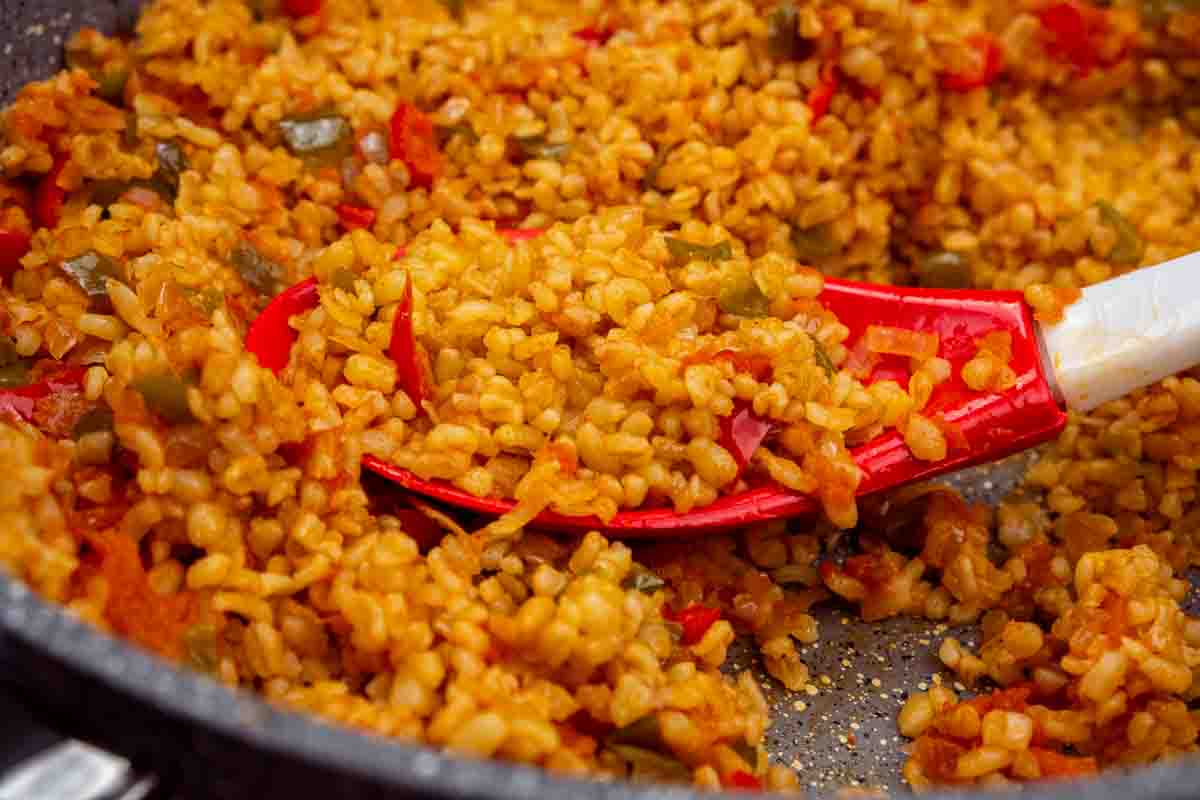
Heat the olive oil and butter over medium heat in a shallow pot. Sauté the onion until it becomes translucent, and then add the diced peppers. Continue sautéing the mixture until the vegetables become fragrant.
Add the tomato paste and coarse bulgur to the pot, sautéing together for 2-3 minutes. Stir in the grated tomatoes, salt, black pepper, and paprika. Continue cooking for a few more minutes. Pour in the hot water, stir well, and cover the pot with a tight-fitting lid.
Cook the mixture on high heat until it starts simmering; reduce the heat to low and cooking until the bulgur absorbs the liquid in the pot. Once all the water has been absorbed, small holes/pockets should begin to appear on top of the pilaf. This is a visual cue that the bulgur pilaf is ready.
Turn off the heat, fluff the cooked bulgur pilaf with a fork, and let it rest for 5 minutes before serving. Enjoy!
Tips
The best thing about many staple dishes is that they’re simple to make and don’t require fancy ingredients. This bulgur recipe doesn’t have any complicated techniques you need to know, but here are a few tips to help you get the most out of this Turkish pilaf.
Choose the right bulgur
We chatted about the various different bulgur grinds earlier. And while switching away from a course bulgur to medium or fine won’t necessarily change the taste of this recipe, it may affect the texture and the cooking experience.
Furthermore, fine bulgur doesn’t require cooking. Switching to it may result in the bulgur becoming mushy (due to its smaller size and the resulting lesser capacity for absorption). You want to use a coarse bulgur wheat grain to a chewy texture that’s perfect for a pilaf that aligns with the traditional preparation of this dish.
Pick the right liquid
For the sake of authenticity, we’re using hot water in this recipe. However, chicken stock (or vegetable stock if you’re looking to keep this purely vegetarian) are a bit more flavorful. Pilaf recipes involve the absorption of liquid, and this means that it will absorb the stock flavorings too, which can take your pilaf to the next level.
Grated tomatoes
If you don’t want to grate your tomatoes (I know, it feels messy), you can use finely chopped tomatoes instead. I strongly recommend grating them however as it brings as it results in a fresh and vibrant pilaf recipe. Opt for ripe, juicy tomatoes to see the best results.
Fluff gently
When fluffing the cooked bulgur, try to be gentle. Like the word, fluffing, is a gentle process. Being gentle stops you from mashing the bulgur grains, while forking your fork through the pilaf results in a separation of the grains, and generally better overall texture.
Let it rest
Once you’ve cooked and fluffed your bulgur pilaf, make sure to let it rest for 10 minutes. This allows the flavors to meld together creating a more cohesive final dish.
What to serve with bulgur pilaf?
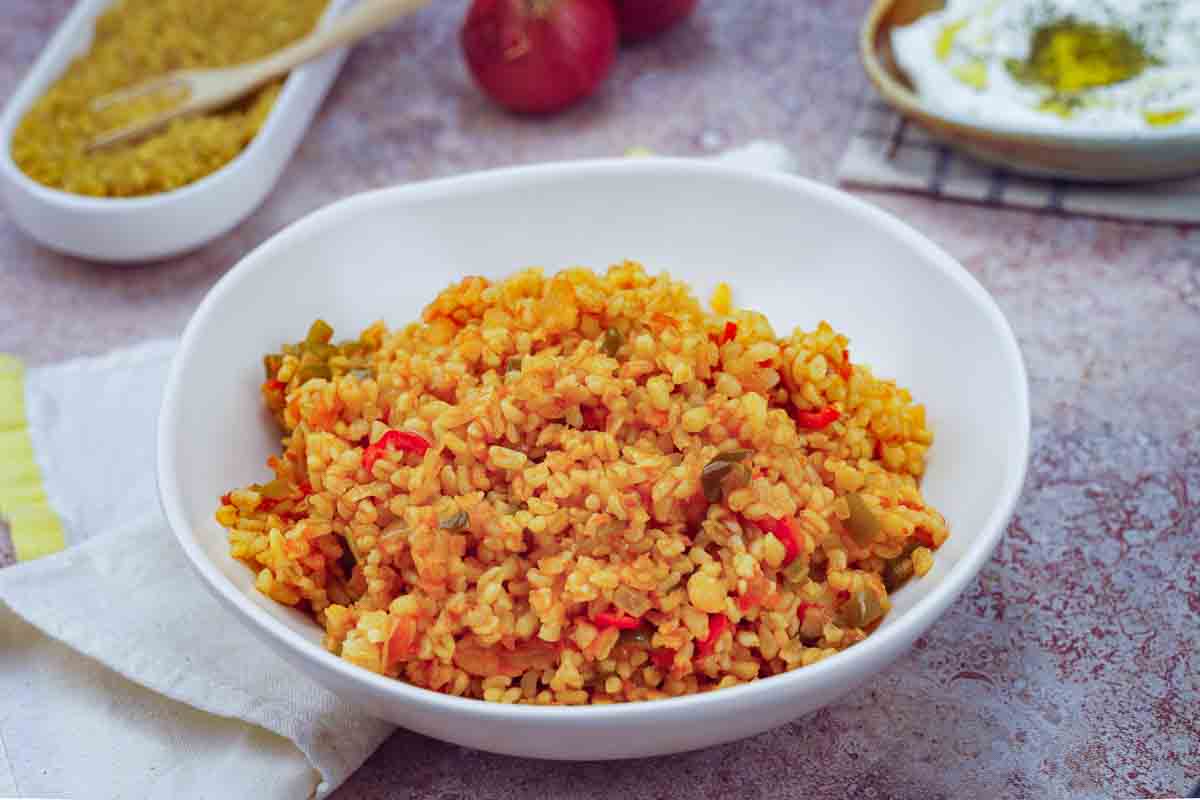
As mentioned above, Bulgur Pilaf is served as both a side dish and as a main course. This means that it can be served with a range of accompaniments, including
- Grilled meats. Bulgur Pilaf is most traditionally served with grilled meats, such as chicken or beef. However, this would also pair nicely with Ali Nazik Kebab, or any other traditional kebab recipe of your choice.
- Koftes. Koftes, which are meatballs made with lamb or ground beef (and sometimes a combination of the two), also pair nicely with Bulgur Pilaf.
- Vegetables. If you are looking for a vegetarian-friendly dish, you could pair Bulgur Pilaf with a range of grilled Mediterranean vegetables. You may also want to try making your own Turkish Zucchini Fritters.
- Salads. Bulgur Pilaf also tends to be served alongside traditional Turkish salads such as Coban Salatasi or Antakya Zeytin Salatasi.
- Pita Bread. Pita bread also serves as a great accompaniment to Bulgur Pilaf, whether this is store-bought or you try your hand at making your own.
- Yogurt sauce. Yogurt sauce, or a dip, is another popular pairing within Turkish cuisine. To make your own yogurt sauce, combine natural yogurt with mint, garlic, and lemon juice to taste. Or if you want to try something with a more Middle Eastern flavor, go for toum instead.
Variations
Turkish recipes have a rich and varied history. They also have several variations of the same dish without much articulation of the difference. Bulgur pilavi can mean different things to different people. Though this tomato-based version is generally considered the standard version in most homes, the full name for it is domatesli bulgur pilavı. The other version you may hear referred to as bulgar pilavi is simply bulgur cooked with butter.
A bulgur pilaf with vegetables added is called meyhane pilaf.
There’s also a richer version of bulgur pilav made using chestnuts, shallots, pine nuts, and a variety of spices, and currants. This fancier version is usually only seen on special occasions in Turkey, but is often still colloquially referred to as bulgur pilavı.
If you’re looking for your own way to enhance the flavors present, consider experimenting with the inclusion of additional herbs and spices. For example, you could add a touch of spice to the dish through the inclusion of red pepper flakes or even chilli powder.
Make it vegan
If you’re looking to enjoy this recipe on a vegan diet, some small alterations are required. You would need to substitute the butter for a vegan alternative, such as coconut oil or plant-based butter. And secondly, ensure to use a vegan-friendly broth or simply water as the cooking liquid.
Storage suggestions
The link below is an affiliate link. This means that if you choose to purchase using it, I will receive a small commission (at no additional cost to you). These small commissions help keep Chocolates & Chai going. Thank you.
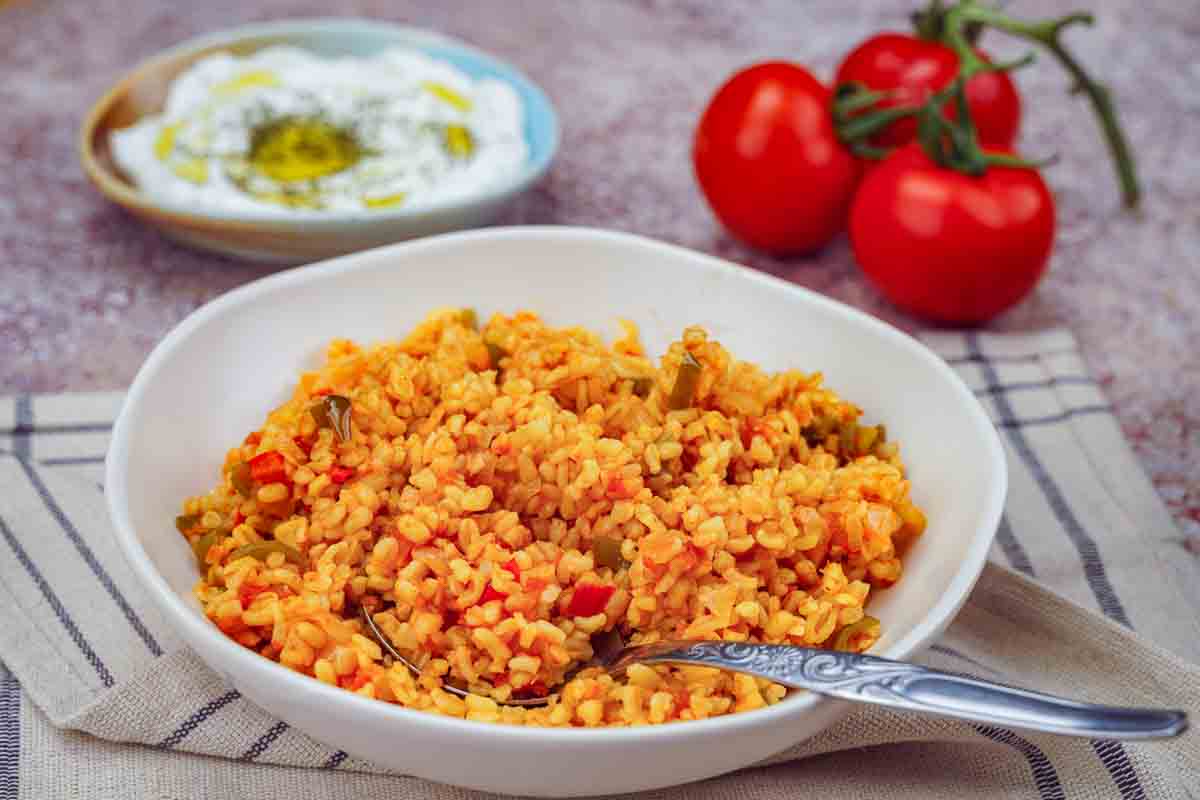
Good news batch cookers! Bulgur pilavi is perfect for meal prepping, as it does not spoil quickly. When stored correctly, it can last between 3-4 days on average, and is also suitable for home freezing. When storing Bulgur pilavi:
- Allow the dish to cool completely
- Store in an airtight container, such as tupperware.
- Store in your fridge/freezer.
While bulgur pilavı can be served cold, it can also be reheated. However, you should ensure that you reheat the dish thoroughly, whether you are reheating it on the stove or in the microwave.
Final thoughts
Bulgur pilavi is a popular Turkish recipe for good reason. It’s not complicated, pairs well with both meat and vegetables, and it tastes great. If you’ve tried it, comment below and let me know. Afiyet Olsun! (That’s “Enjoy your meal” in Turkish.)
📖 Recipe

Bulgur Pilavı – Turkish Bulgur Pilaf
- Total Time: 50 minutes
- Yield: 4–6 bowls 1x
Description
Learn how to make hearty and nutritious Bulgur Pilavı with this easy recipe. This pilaf is a staple across homes in Turkey.
Ingredients
- 2 cups coarse bulgur
- 3 tablespoons butter, unsalted
- 3 tablespoons olive oil
- 1 large onion, diced
- 2 cubanelle peppers, diced
- 1 sweet red pepper, diced
- 1 tablespoon tomato paste
- ½ teaspoon salt
- ¼ teaspoon black pepper
- ½ teaspoon paprika
- 2 medium tomatoes, grated
- 3 cups hot water (or your preferred broth)
Instructions
- Heat olive oil and butter over medium heat in a shallow pot. Add and sauté onion until it becomes translucent, then add the diced peppers. Continue sautéing until the vegetables become fragrant.
- Add the tomato paste and bulgur to the pot, sautéing together for 2-3 minutes. Stir in the grated tomatoes, salt, black pepper, and paprika. Continue cooking for 1-2 minutes.
- Pour in the hot water, stir well, and cover the pot with a tight-fitting lid.
- Cook the mixture on high heat until it starts simmering; reduce heat to low and continue cooking until the bulgur absorbs the liquid in the pot. Small holes appearing are visual cue that the bulgur pilaf is ready.
- Turn off the heat, fluff the cooked bulgur pilaf with a fork, and let it rest for 5 minutes before serving. Enjoy!
- Prep Time: 20 minutes
- Cook Time: 30 minutes
- Category: Side dishes
- Method: Stovetop
- Cuisine: Turkish





Greta
Really delicious! I also added a diced zucchini and squeezed a lemon over it at the end. Thank you
Riz
Sounds wonderful, so glad you enjoyed it!
Aileen
Hi Riz, two questions. What are cubanelle peppers? And how do you grate a tomato? Do you remove the skin first?
Riz
Hey Aileen!
Cubanelle peppers are the cousin to regular capsicum/sweet green peppers. (You can get away with using green peppers here, but cubanelles are a little less sweet and ever so slightly spicy).
For grating a tomato: I find the easiest way is to just cut it in half and begin grating the flat side. No need to remove the skin separately 🙂
Hope that helps!
Aileen
Thanks Riz!